Jib Crane
Jib Crane
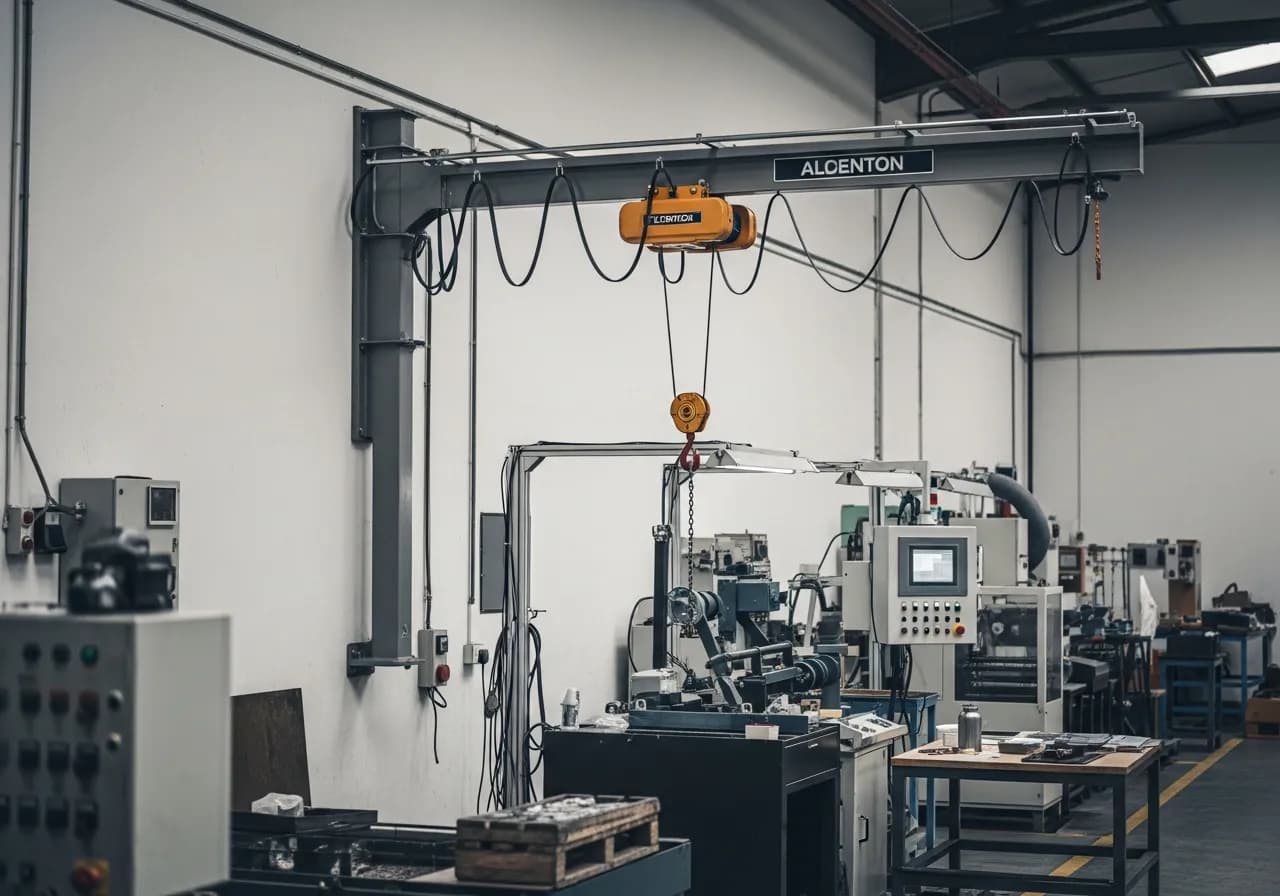
A jib crane mounts a rotating arm on a wall, column or freestanding pillar to serve a circular work area — ideal for loading machines, feeding a workstation or supporting a hoist over a single cell. Wall-mounted and floor-mounted (freestanding) versions rotate up to 360 degrees, and articulating jibs reach under obstructions or around corners. Kranes supplies and installs jib cranes sized to your reach, capacity and rotation, then keeps them running with inspection and parts.
Best for Single-cell coverage and machine loading
Key specifications
- Wall, column & freestanding mounts
- Up to 360° rotation
- Articulating reach options
- Workstation & machine loading
- Sales, service & parts
About Jib Crane
Key Takeaways
- ✓Jib Crane pricing: By quote
- ✓Key features: Wall, column & freestanding mounts, Up to 360° rotation, Articulating reach options
Jib cranes come in a few clear forms, and the mount decides the coverage. A wall-mounted or wall-bracket jib swings an arm out from existing building steel to serve a bench or machine without using floor space. A floor-mounted (freestanding) jib stands on its own foundation and rotates a full 360 degrees, so it can be placed anywhere a column will fit. A mast-type jib braces to both floor and overhead steel for the longest reach, and an articulating jib adds a second pivot so the crane jib can reach under a mezzanine or around an obstruction.
Jib Crane — Configurations
The job of a jib crane is to put powered lifting exactly where the work happens. It loads and unloads CNC machines and presses, feeds a welding or assembly cell, services a single bay, and pairs with an overhead crane to spot loads in dead zones the bridge cannot reach. Because each crane covers a defined circle, several small jibs often beat one large crane for repetitive station work — faster cycles, less waiting and a safer ergonomic lift for the operator. Sizing a jib crane means three things: the capacity, the reach (arm length) and the degrees of rotation the spot needs.
Applications
From there Kranes matches the mast or bracket, the boom and an electric chain or wire-rope hoist with the controls to run it, then confirms the foundation or wall steel can carry the moment. Buy when a workstation runs every shift; we also supply jib cranes as part of a wider workstation and monorail layout when several cells need coverage. A jib crane is simple, but it is still regulated lifting equipment that earns inspection, certification and parts over its life. Kranes load-tests and documents jib cranes to OSHA and ASME B30 requirements, and sources hoists, brakes, slew bearings, stops and controls for every make.
Service & support
Tell us the spot to cover, the heaviest load and the swing you need, and we return a quote with the right jib, hoist and installation — supported with service and parts across the United States.
“The employer must comply with all manufacturer procedures applicable to the operational functions of equipment, including its use with attachments.”
At a glance
| Specification | Details |
|---|---|
| Product | Jib Crane |
| Price range | By quote |
| Best for | Single-cell coverage and machine loading |
| Makes covered | All major makes |
| Operation | Operated or bare |
| Warranty | By quote |
| Compliance | OSHA / ASME B30 |
| Coverage | Nationwide (US) |
Why choose Jib Crane?
What this equipment is built to do.
Jib Crane across the United States
Kranes supplies jib crane directly in major cities across the United States.
Questions about Jib Crane
How much does crane rental cost?
There's no honest flat rate — crane rental (or crane hire) is priced per job. The main drivers are the crane class and capacity, how long you need it (hourly, daily, weekly or by project), whether you need a certified operator, the rigging required, and site access. A small boom-truck pick costs a fraction of a multi-day mobile or tower-crane job. Rather than quote a misleading average, Kranes prices your exact lift: send the load, the radius, the lift height and the timing, and we return a clear, itemized quote within 24 hours so you can budget with confidence. Longer commitments usually lower the effective rate.
What is the 3-3-3 rule for cranes?
The 3-3-3 rule is a quick safety habit some operators use: take three seconds to start a movement smoothly, hold steady for three seconds, and take three seconds to stop — keeping loads from swinging through sudden acceleration or braking. It's a rule of thumb, not a regulation, and it never replaces a proper lift plan, load chart and the operator's judgment. On any Kranes lift, NCCCO-certified operators follow the manufacturer's load chart and OSHA 1926 Subpart CC practice, with the rigging and ground conditions verified before the load leaves the ground. If a load starts to swing, the operator stops and lets it settle before moving again.
What does "crane services" mean?
"Crane services" covers everything around getting a load lifted safely beyond just the machine: supplying the crane (sale or rental), providing certified operators, planning and engineering the lift, rigging, and the ongoing maintenance, inspection, certification and parts that keep a crane compliant. As the nationwide supplier, Kranes covers all of it — sales, rental, service and parts — from one request. You describe the job; we provide the crane and the certified support to complete it, then keep it running afterward. That includes inspection records, certified operators and a written quote that spells out every part of the scope before the crane mobilizes.
What is the difference between a gantry crane and an overhead crane?
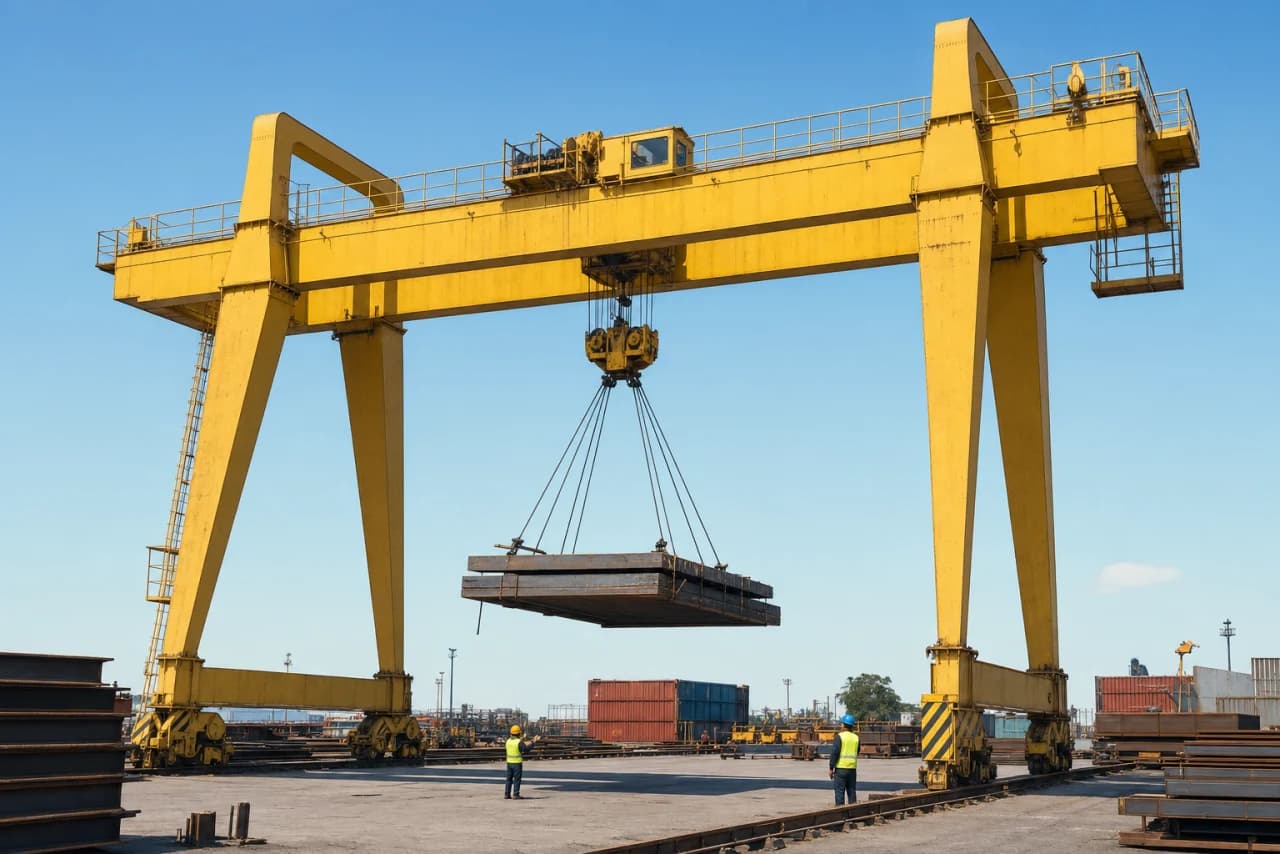
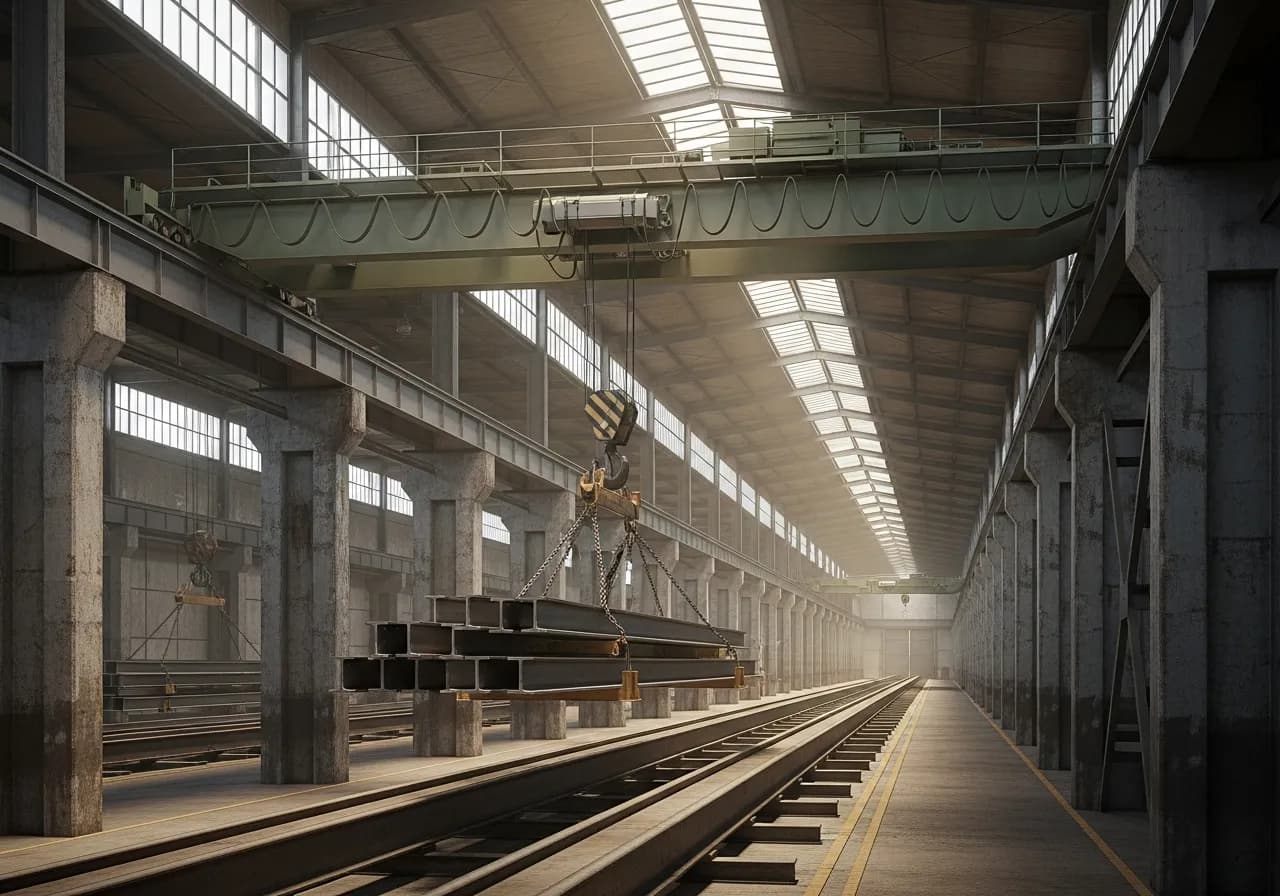
Both run a hoist along a bridge, but the support is different. An overhead (bridge) crane carries its bridge on runway beams fixed to the building structure, so it clears the floor entirely and reaches the highest hook positions. A gantry crane carries the same bridge on freestanding legs that run on floor rails or castors, so it needs no building steel and can work outdoors, in yards or anywhere a runway can't be mounted overhead. Overhead cranes suit permanent in-bay production; gantries suit flexible, portable or outdoor lifting. Kranes supplies, installs and services both. Both are covered by OSHA 1910.179 when used in general industry.